Get to know me
About Me
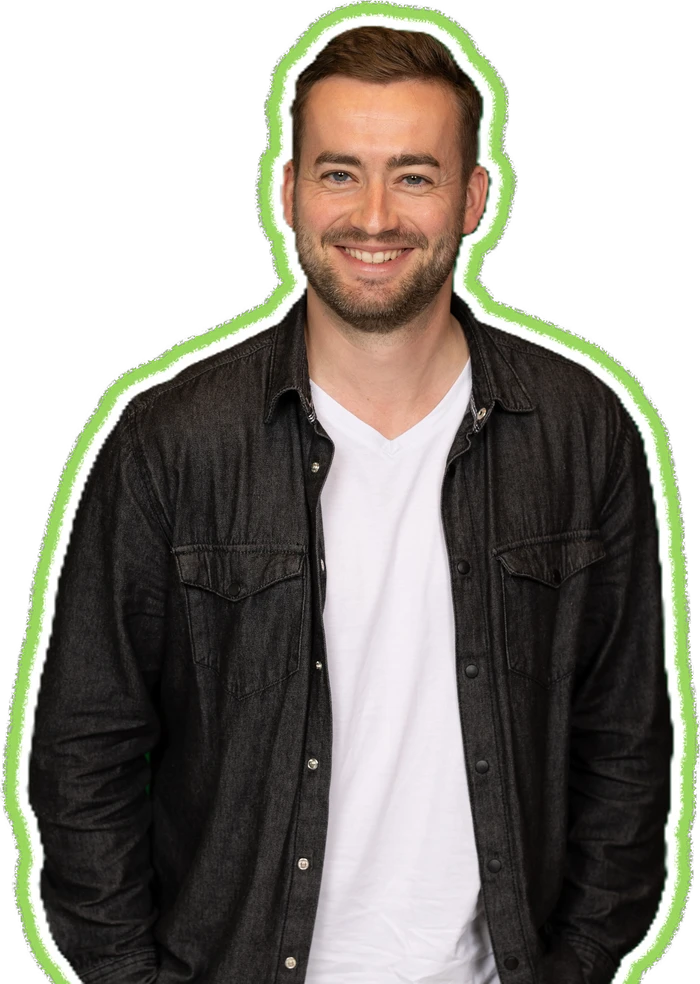
I'm Jasper. A rational optimist, an honest storyteller and a careful listener, and after eleven years in tech and eight in product I am still curious about the why-are-we-doing-it-even?
Right now I'm looking for my first independent assignment as an interim Product Owner, Manager or Lead, through my own business, Venema Consulting & Innovatie. Interim work means a new team and a new problem every time, and I like getting out of my comfort zone. Secretly, that's where I'm most comfortable.
I studied Business Administration at the University of Amsterdam and did my thesis research on innovation at Shell, Philips and KPN. Product work then took me to Sydney for JobAdder and, years later, to South Africa for Heineken. Somewhere along the way I learned that the real problems are rarely in the backlog. They're in assumptions nobody has tested out loud, or in decisions that were never quite made, and that's usually where I start.
In my first two weeks somewhere new I mostly listen, to the team and to customers, and I try to find out what has already been tried. I won't have a grand plan on day three, but I will have a fairly sharp idea of where things are stuck. I can start working on the handover from the first week too, because in the end interim work is judged on what still runs after you've left.
In July 2026 Toptal admitted me as a Verified Expert in Product Management, after a screening that puts me in the top 3% of freelance product managers. If you'd rather hear it from people I've worked with, read what former colleagues say.
Outside work it's CrossFit, city trips and hiking trails, time with family, and building things with AI tools that used to need a whole engineering team. That last one is good fun.
Product Philosophy
Why can two teams with roughly the same budget, the same tooling and roughly the same people end up so far apart? In my experience it's almost never the engineering. It's that one team keeps asking what the work is for, while the other team has quietly settled for velocity as a stand-in for direction. I've seen that pattern in nearly every organisation I've worked in, and I made a decent share of those mistakes myself early on.
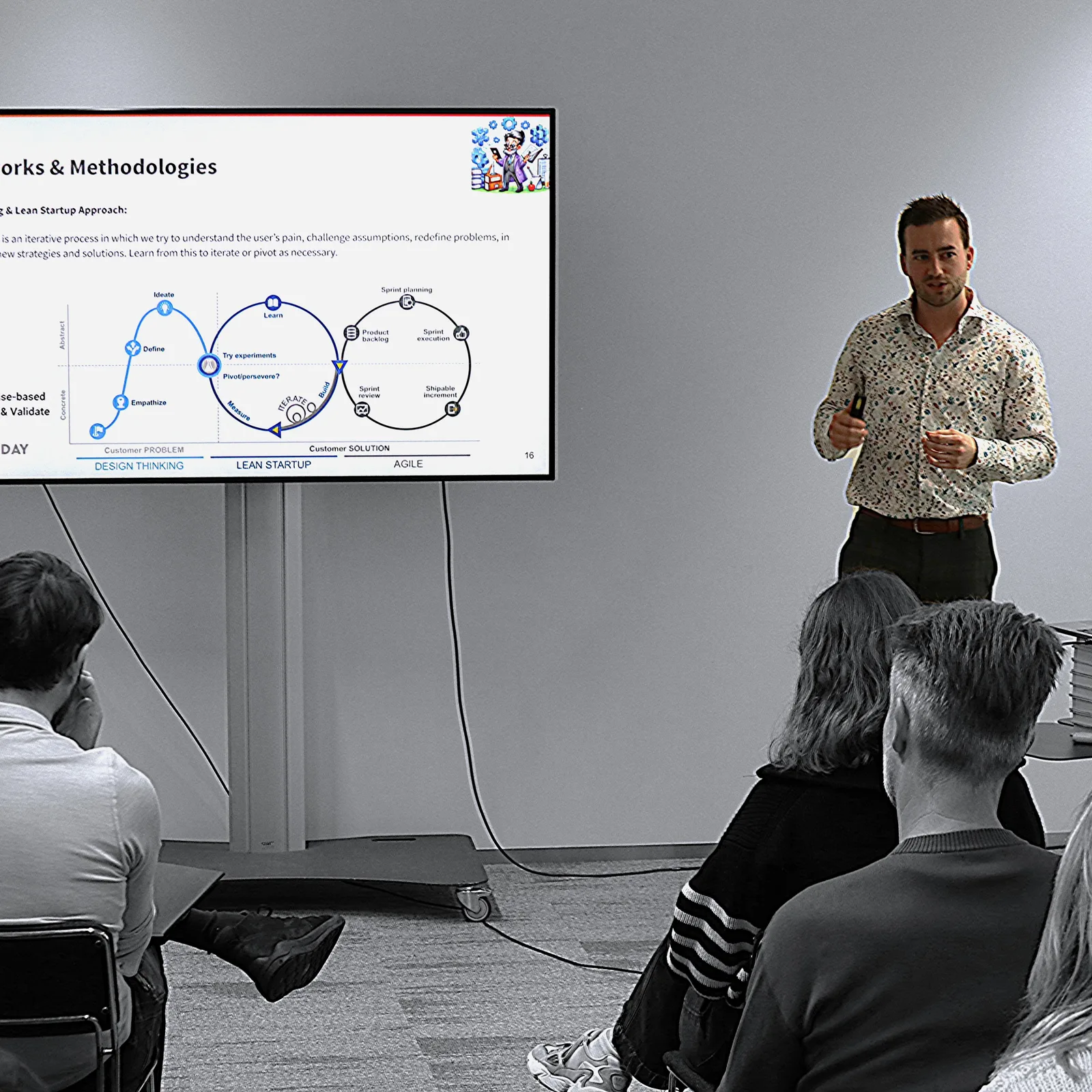
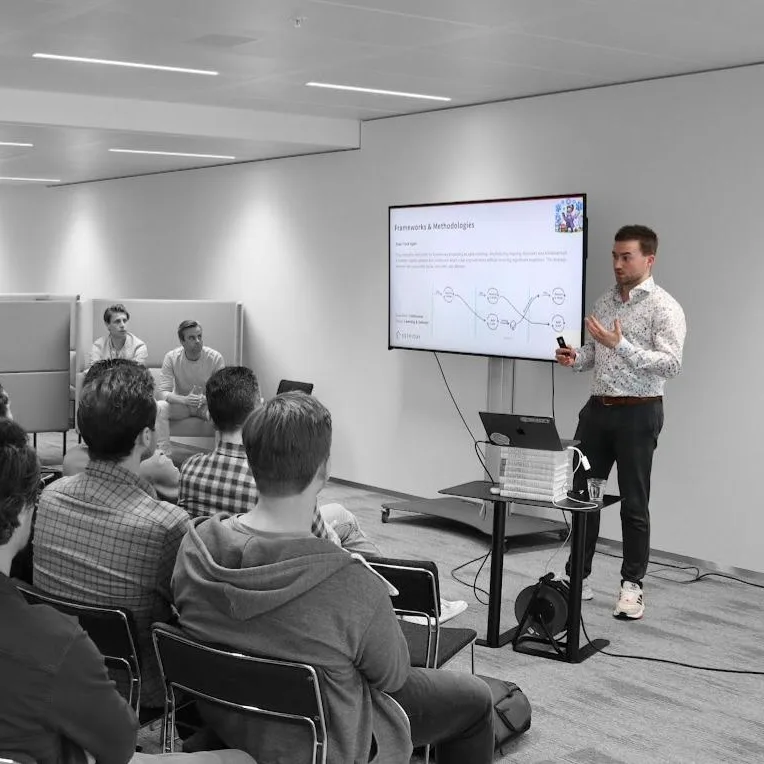
Another framework won't fix that. What does help is product thinking as a daily practice. Test your assumptions properly and stay close to the people who actually use the thing. And when something isn't working, have the discipline to stop it, even when stopping is awkward.
There are three ideas I keep coming back to. A roadmap only counts once something is in front of a user, so I'd rather cut scope than present a plan. Data informs and people decide, which means AI and analytics get a seat at the table but not the last word. And good products come out of teams rather than individuals, which is why I treat documentation as part of the product and take handovers seriously, so that what you build today still works when the team around it looks different.
My Journey
My career didn't follow a straight line, and I've stopped apologising for that. I started as a Business Analyst at Intertrust, rolling software out across international offices, from Switzerland and Luxembourg to the Bahamas. It taught me something no certificate does: how technology behaves once it meets a real organisation, with real users who already have a way of doing things.
After that I became Product Owner of a talent-acquisition platform at Endouble, and then went to Sydney, where my research into the candidate experience laid the groundwork for JobAdder's pivot towards the candidate's perspective in its applicant tracking software. Back in the Netherlands I built Randstad Groep Nederland's queryable data lake on AWS S3, with an automated metadata catalogue so people could actually find what they were looking for. At 25Friday I helped Dutch scale-ups take product as a discipline more seriously, ran product-maturity assessments for investors, and got to interview three product people I count as heroes of mine. Most recently, at Heineken, I owned the vision and strategy for a new global sales application and took it from prototype to MVP, built for thousands of reps selling beer in the UK, Italy and South Africa.
Every company was different and every problem asked for a different approach, and I think that's what made me adaptable. I rarely walk in with the answers, but I've learned which questions to ask and who needs to be around the table to answer them.
AI & Building
AI has changed how I work more than anything else in the past few years. I'm not an engineer or a developer myself, but these days I build my own prototypes and side projects with Claude Code and Gemini CLI, which some people call vibe coding. Work that would once have taken an engineering team weeks, I can now explore and test on my own in an evening.
If anything, it has made me respect software engineering more. Getting a prototype to work is the easy part. Production software that scales, and that a team can keep maintaining long after the people who wrote it have moved on, is a different craft, and it still takes engineers who know what they're doing.
So starting has become very cheap, and finishing is just as hard as it always was. For a product manager that still changes a lot. When you've been in the material yourself, you can speak the language of engineering, you can build the thing instead of describing it in a ticket, and you make better calls because you understand what you're asking of people.
Companies I've worked with
















Now that you know how I work
The next step is a 30-minute conversation about your team and what’s stuck right now.
Get in Touch